










ITIL Change Management in a Service Desk System

IT change management should not start with a random message and end with someone saying that the implementation worked. With the Enterprise license, the Codenica application lets you record why a change is needed, assess its impact and risk, plan the next steps, collect approvals, assign tasks and keep the complete implementation history. The Codenica service desk extends the system with ITSM and ITAM processes, so IT teams can work from the same information. Cloud stores data in Microsoft Azure. On-Premise runs inside your company, keeps data on your infrastructure and can work 100% offline without internet access or contact with Codenica servers.


IT change management in the Codenica service desk system
Available on Microsoft Marketplace

Change Management as Part of the Codenica Service Desk

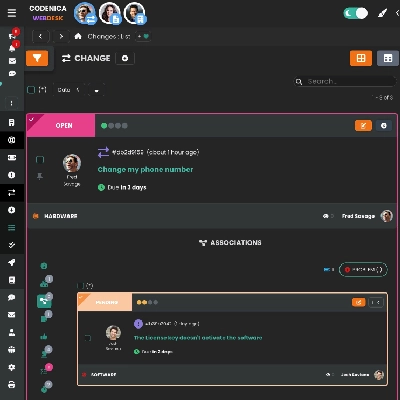
A change may concern a server, network, application, device, configuration or service for which your company is responsible. Its record should therefore stay connected to the rest of the documentation. Codenica software links changes with tasks, IT assets, tickets, problems, releases and notes. The team can see what needs to be done, who owns each part and which elements of the environment may be affected. On-Premise lets you keep this process inside your own network, including when the application has to work without internet access.

Background-MainFeatures-box-1
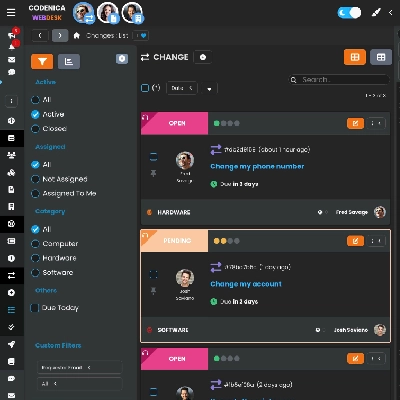
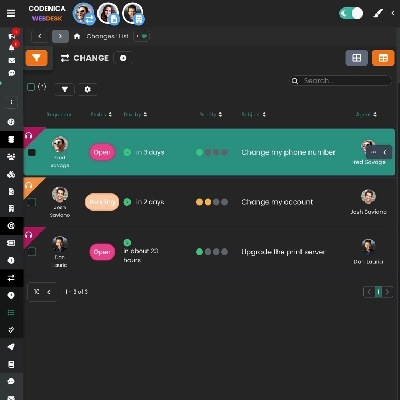
Different Views of the Same Change
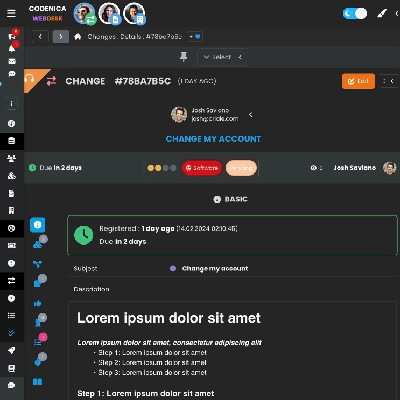
People do not all work with a change register in the same way. You can review changes in an item view, use a table with configurable columns or open the details of one change. Administrators and change managers can adapt the view to their daily work, while someone investigating a specific case can find the relevant information without moving through unrelated screens.
Background-MainFeatures-box-2
Templates and Knowledge for Change Planning
Recurring changes do not have to be described from scratch every time. The Codenica application lets teams use prepared templates, earlier arrangements and knowledge base articles to keep documentation consistent across implementations. This helps prevent important details from being missed while still leaving room to record what is different about the current change.
Background-MainFeatures-box-3
Links to Other Service Desk Items
The Codenica system can link a change to a ticket, problem, release, IT asset, document or task. The person assessing the change can see its context, and the team does not have to search through separate registers. After the work is complete, it remains clear what the change concerned and which parts of the environment it could affect.
Background-MainFeatures-box-4
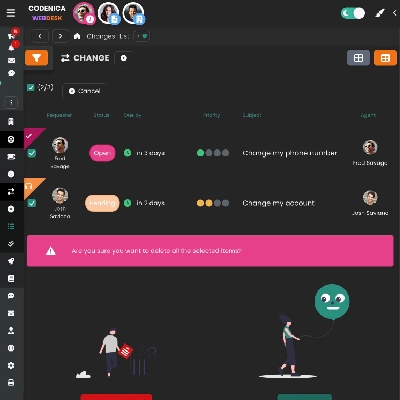
Bulk Editing of Changes
When a team is handling many changes at once, opening every item separately quickly becomes a waste of time. The Codenica platform lets you update selected fields across several changes, such as status, assignment or category. The team can bring the register up to date faster while keeping the data consistent.
Background-MainFeatures-box-5
Stages, Tasks and Responsibility
A larger change is rarely one action carried out by one person. In the Codenica platform, you can divide it into stages and specific tasks, assign them to the right people and track the progress. Everyone knows which part they own, while the person coordinating the change can see what has been completed and what is still waiting to be done.
Background-MainFeatures-box-6
Tracking Time Spent on Changes
For changes that involve several stages, it helps to know how much work the implementation actually required. Codenica software lets teams record time spent on tasks linked to a change. This makes it easier to review workload, plan future work and see whether earlier estimates matched the real effort.

Approving a Change Before Implementation

Not every change carries the same level of risk. Before work begins, the team should know who made the decision, what information was reviewed and why the change is ready to be implemented. The Codenica application brings this stage together by recording the people responsible for approval and the history of each decision.

Who Should Approve the Change?
In the Codenica software, you identify the people who should review and approve a change before implementation starts. They can check the description, its impact on the environment, linked IT assets and the implementation plan. Once a decision is made, the system keeps the approval record, so the team can later see who agreed to the implementation and when. This matters for changes affecting services, infrastructure and company data.
Screenshot showing the change approval section.

Plan the Change Before Implementation Starts

A useful change record contains more than a title and a date. It should explain why the change is needed, what it concerns, what could be disrupted and how to return to the previous state if the implementation does not produce the expected result. Codenica software lets teams collect this information before work begins and check whether the planned change conflicts with other activities.

Describe First, Then Act
The change form lets you record the reason, scope, impact and risk assessment, schedule, implementation plan and rollback plan. People involved in the process do not have to rely on a short message or a verbal arrangement. They can see what is meant to happen, which conditions must be met and what should be checked after implementation. The Codenica application helps move a change from an idea to controlled execution.

IT Assets and Documentation Linked to a Change

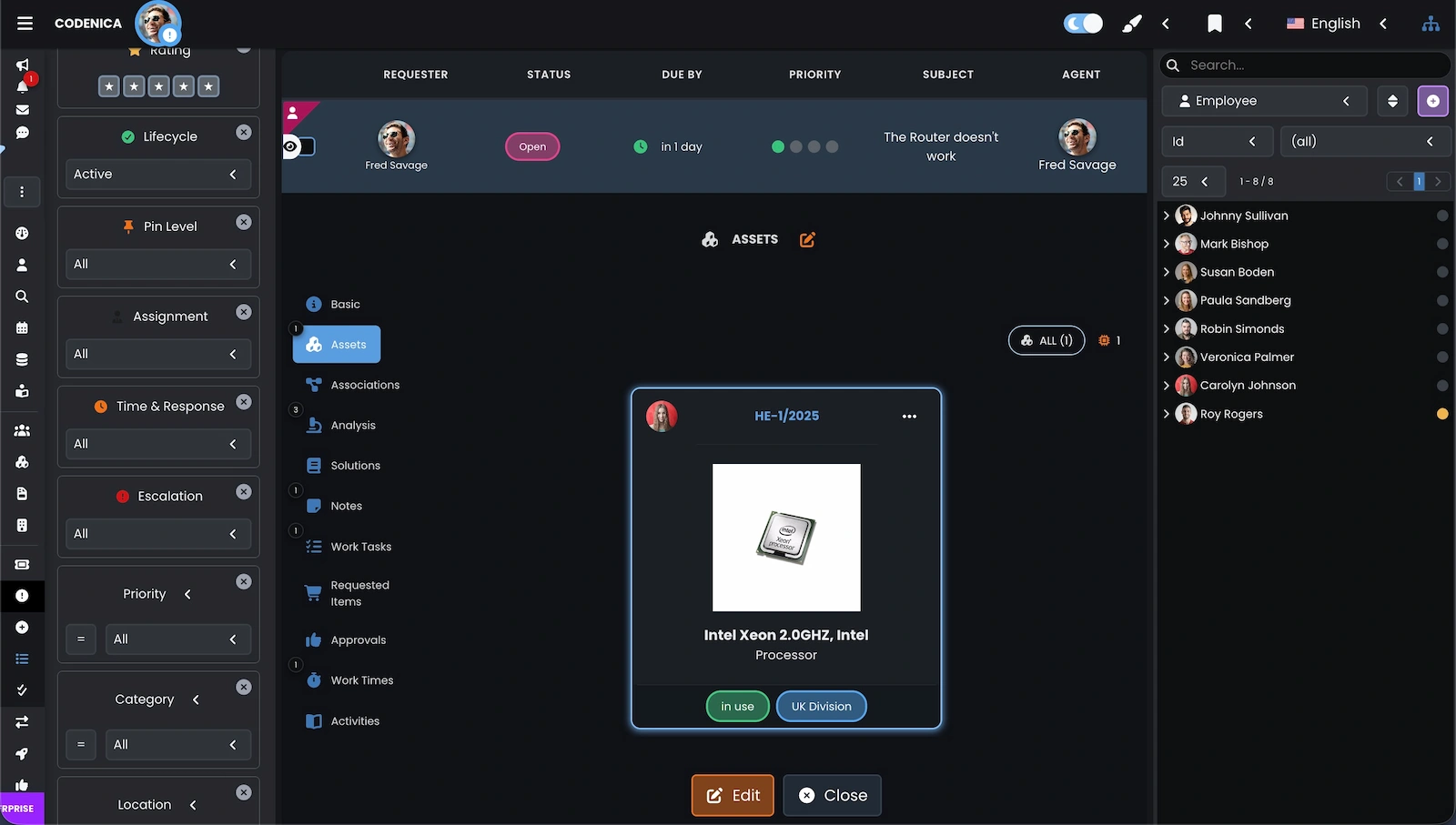
A change does not exist in isolation. It may concern a particular computer, server, application, network device, license or document describing a configuration. The Codenica platform links changes with assets and documentation, so impact assessment can be based on information about the real environment. This is where change management connects with ITAM and IT asset records.

The Technical Context Behind the Change
In the Codenica application, you can assign IT assets and documents that help explain the planned action. The team can see which hardware, software or infrastructure component may be affected, while the approver has the information needed to assess the risk. Cloud stores this data in Microsoft Azure. On-Premise keeps linked assets, documents and change history inside your company's own infrastructure.
Screenshot showing an IT asset and document linked to a change.

A History of Decisions and Actions for Every Change

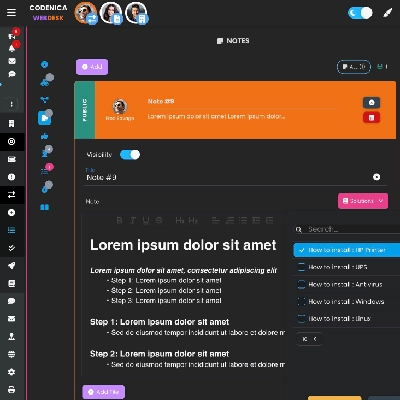
After a few weeks, it is difficult to reconstruct a change from memory or from messages scattered across inboxes. Notes attached to the change preserve arrangements, checks, comments and information about completed work. The history therefore does not end when the implementation is closed, and the team can use it when handling a similar change later.

Documentation That Stays with the Change
Notes let the team document decisions, observations and next steps without separating them from the change itself. Someone taking over the matter can see the earlier context, and the team can return to it during a review of the completed implementation. The Codenica system keeps this history with the other change data. In On-Premise, it can remain inside the company's infrastructure without being sent to external servers.

Frequently Asked Questions

Background-e787933c-7954-47c0-87fc-cf69dc96ba0e

Do You Need to Bring Order to IT Changes?

Explore change planning, approvals and documentation in the Codenica application.

Codenica anim-changes
}