












Data Security in Cloud and On-Premise

The Codenica system lets you choose a data storage model that fits the way your company works. Codenica Cloud runs in Microsoft Azure, where security is shared between the service provider and your organization. Codenica On-Premise is installed inside your company, so the database, files, configuration, and monitoring data remain in your company infrastructure. Both versions provide role-based user access control. On-Premise operates 100% offline, with no contact with Codenica servers and no Internet access.


Codenica Cloud and On-Premise Application for Secure Company Data Storage
Available on Microsoft Marketplace

Cloud and On-Premise - Choose Where Your Data Is Stored

Data security starts with a conscious deployment choice. Codenica Cloud lets you use the system without maintaining your own server, while On-Premise gives your company full control over where the application runs, along with the database, files, and agent communication.

On-Premise - Your Data Stays in Your Infrastructure
With Codenica On-Premise, the Codenica application runs on a server owned by your company. The PostgreSQL database, files, configuration, monitoring data, and agent communication stay inside your company network. You decide the application address, how users access the system, and where the data is stored. The installation uses local file storage, your own SMTP server, local mailboxes for creating tickets from email, and your own agent endpoint. With a 100% offline configuration, data does not leave the company, and the system does not contact Codenica servers or need the Internet. Your company is then responsible for the security of its servers, network, accounts, updates, and backups. Cloud works differently: application data is stored in Microsoft Azure, including private subnets and repositories, while your organization remains responsible for configuring access, accounts, and its data correctly.
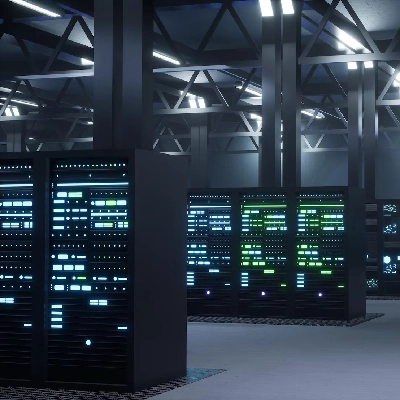
Image Showing an Administrator Working With the Company's Server Infrastructure.

Two Deployment Models and Shared Security Principles

Cloud and On-Premise differ in where the system runs and how responsibilities are divided. In both models, security depends on the correct configuration of the system, accounts, network, and access to data.

Background-Foundation-box-1
Cloud on Microsoft Azure
The Codenica Cloud version runs in the Microsoft Azure environment. The cloud provider is responsible for the physical infrastructure and Azure service layer, while your organization manages its data, identities, accounts, configuration, and user access. This model suits companies that want to use the application without maintaining their own server.
Background-Foundation-box-2
On-Premise in Your Company's Infrastructure
You install the On-Premise version on your own server and run it at an address you choose. The PostgreSQL database, files, configuration, and agent communication stay in your organization's environment. You can keep 100% of your data inside the company and run the system without a connection to Codenica servers or the Internet.
Background-Foundation-box-3
Responsibility for Data and Access
Regardless of the deployment model, your company is responsible for its data, accounts, and access rules. In Cloud, responsibility is shared with the Azure infrastructure provider. With On-Premise, the organization is also responsible for the server, network, updates, security controls, and backups. The Codenica system helps restrict access through RBAC roles.

Data Encryption and Secure Storage

Data security covers transmission, storage location, and user access. Cloud uses the protections available in the Microsoft Azure environment, while On-Premise lets the company choose its infrastructure, data storage, and additional security controls.

Encrypted HTTPS Communication

Communication with the Codenica system can use the encrypted HTTPS protocol. This protects data sent while working with the application, including request content, user data, and attachments. In Cloud, the service environment handles this configuration. With On-Premise, your company administrator is responsible for correctly configuring and securing the application address.

Data Stored in the Selected Environment

In Cloud, application data is stored in the Microsoft Azure environment. With On-Premise, the database and files are stored at a location selected by the company, on its server and within its network. Encryption of disks, volumes, and the database in an On-Premise installation depends on the organization's infrastructure configuration.

Files Available Only to Authorized Users

Attachments, images, and documents should not be publicly accessible. The Codenica system provides them according to the user's permissions and access to the repository. With On-Premise, files stay in the local storage on the company's installation server, while the organization's administrator is responsible for server protection, file system permissions, and backups.

User Access Configuration

Access control matters in both the Cloud service and an On-Premise installation. The Codenica system lets you define user permissions so each person receives access to the features and data required for their role in the organization.

Role-Based Access Control (RBAC)
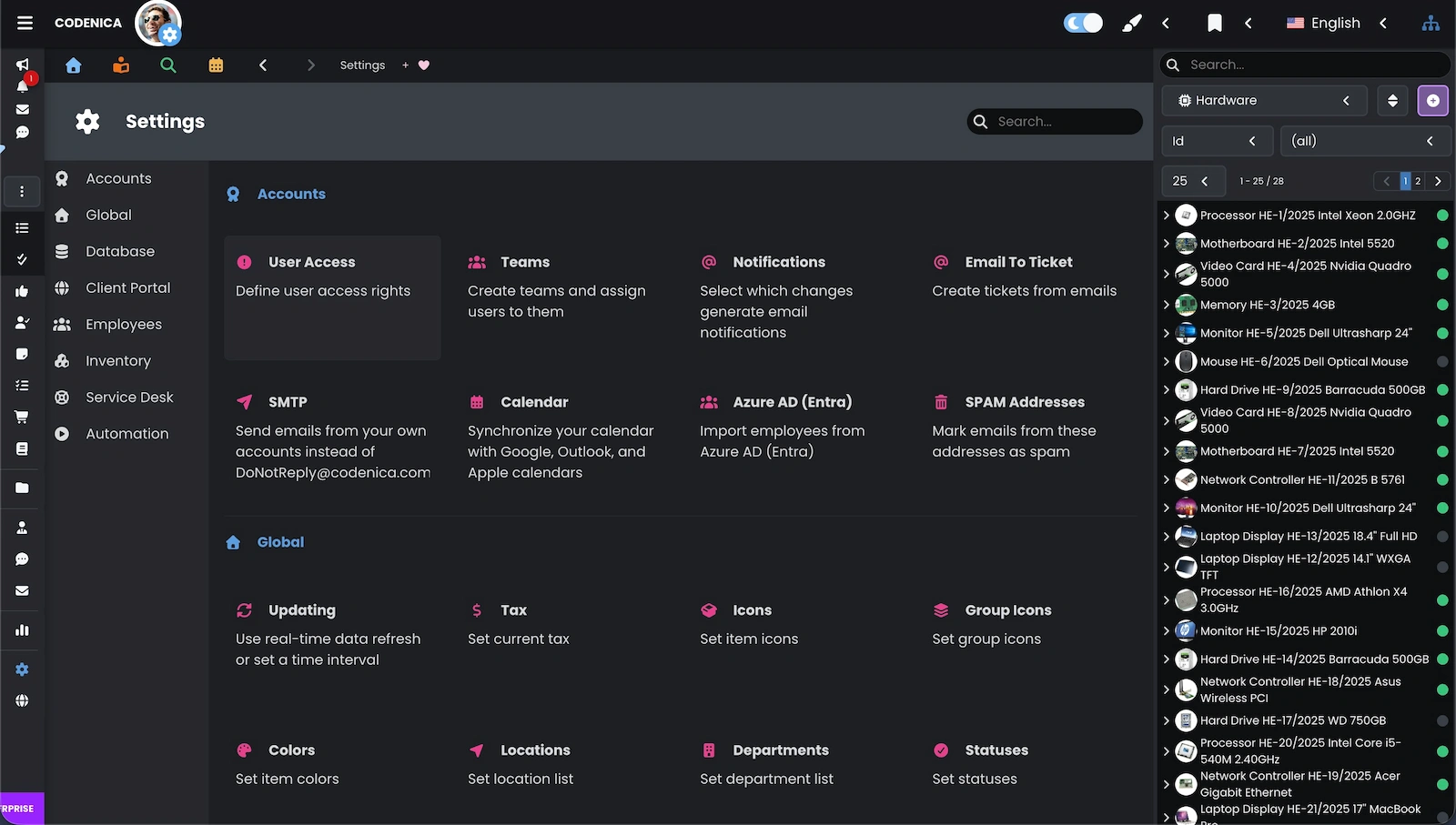
The Codenica system uses role-based access control (RBAC). An administrator can assign permission sets that define access to modules, data, and operations. In a large organization, this helps maintain shared rules across multiple teams and locations. On-Premise also lets the company connect these rules with its own network, accounts, and security policy.
Screenshot Showing User Access Settings in the Codenica System.

Data Security as a Shared Responsibility

Secure operation of the Codenica system requires both application and infrastructure controls and the right decisions by the organization. Cloud uses Microsoft Azure infrastructure, while On-Premise runs in an environment managed by the company. In both models, the organization must protect accounts, configure roles, limit access, and apply rules suited to the type of data being stored.

Additional Data Protection Measures

Security does not end with choosing Cloud or On-Premise. It also includes day-to-day configuration, permissions, backups, updates, and the way administrators work. Responsibilities differ between the two models, so the organization should adapt its procedures to the selected infrastructure.

Background-AdditionalSecurity-box-1
Secure Infrastructure Configuration
In Cloud, Microsoft Azure provides part of the protection, while the company configures the elements under its control. With On-Premise, the organization manages the entire infrastructure. This includes the server, network, application address, administrative access, and protection of the environment in which the Codenica system runs.
Background-AdditionalSecurity-box-2
Access Control and Role Separation
RBAC permissions define who can view, edit, and manage particular areas of the system. Roles should match the user's actual responsibilities. The organization should also review them regularly so access belonging to former employees or changed teams is properly restricted.
Background-AdditionalSecurity-box-3
Backups and Data Recovery
The backup plan should reflect the importance of the data and the company's requirements. In Cloud, responsibilities follow the service model and the arrangements for the environment. With On-Premise, the organization defines the backup frequency, storage location, recovery tests, and procedure for returning to work after a failure.
Background-AdditionalSecurity-box-4
Updates and Informed Administration
Security requires an up-to-date system, controlled changes, and informed access management. In Cloud, the provider maintains the service, while the company remains responsible for its own configuration. With On-Premise, the organization administrator plans and performs updates, secures the local environment, and controls which integrations are enabled.
Background-5f95316c-fe98-40e9-a0fa-8d51a8e1953b

Would You Like More Control Over Your Company's Data Security?

Create a free company account and see how the Codenica system works.

Codenica anim-security
}