



Want to See How Team Collaboration Works in the Codenica System?
Create a free business account and try working with teams, tickets, and shared context.
The Codenica system lets agents work with tickets, assets, and tasks in a shared workspace, without guessing who is currently changing the data. You can see other users' activity, who owns the request, and the context needed for the next decision. Collision detection signals when people are working in parallel, while roles, teams, and watchers help clarify who should handle each part of the work. The same collaboration mechanisms are available in Codenica Cloud and the On-Premise version installed at your company's premises, including 100% offline operation.
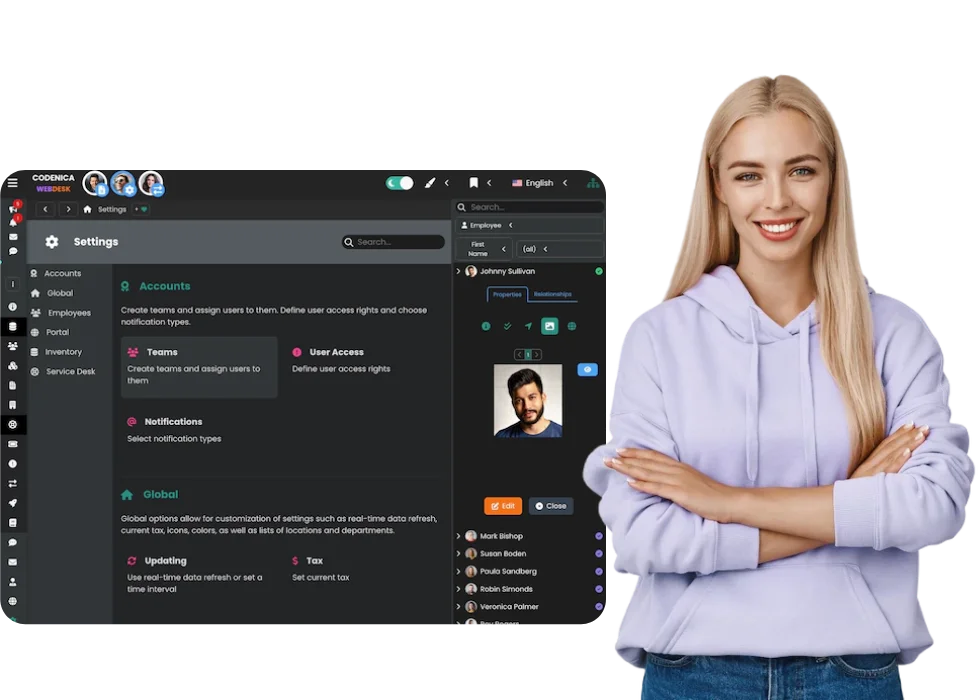

A single help desk request may require someone who works with infrastructure, applications, hardware and devices, or user support. Team collaboration is easier when everyone knows their responsibility, can check the ticket context, and can see that another agent is already working on the request. The Codenica application brings this information together in one place, without moving decisions between private messages and separate lists.
A collision occurs when several agents open, review, or edit the same ticket, asset, or other application item at the same time. The Codenica system shows user activity in real time, so the team can notice parallel work before data is overwritten or conflicting actions are taken. This does not replace communication, but it gives the team a clear point of reference.
When several people work on the same ticket, it matters not only who owns it but also who made the latest change. A small icon next to the ticket helps you identify the source of the latest activity and decide whether you need to review new information before continuing.
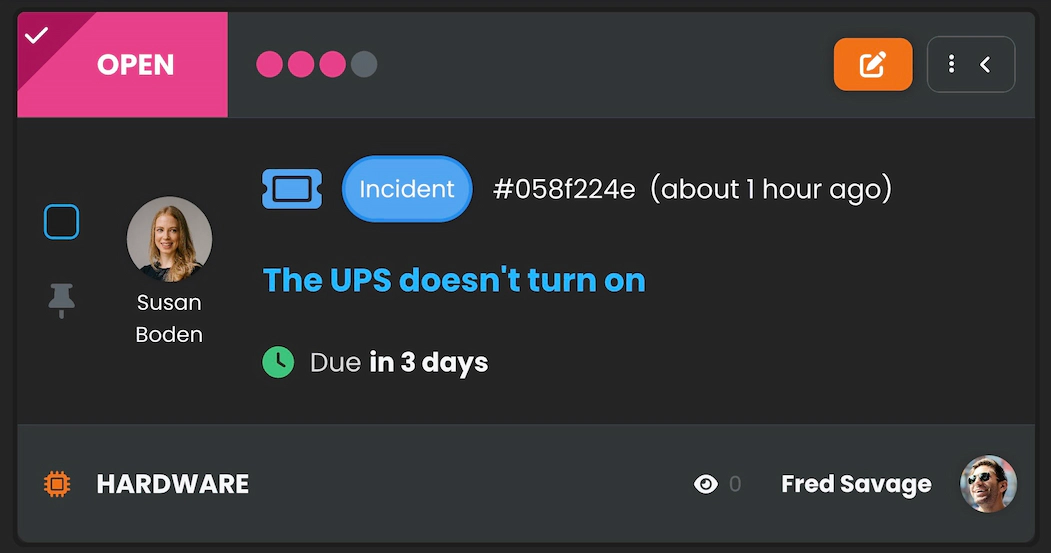
You Made the Last Change
The check icon means that you were the last person to edit the ticket. You can return to your work without searching for changes made by other agents and keep the work moving in the same direction.
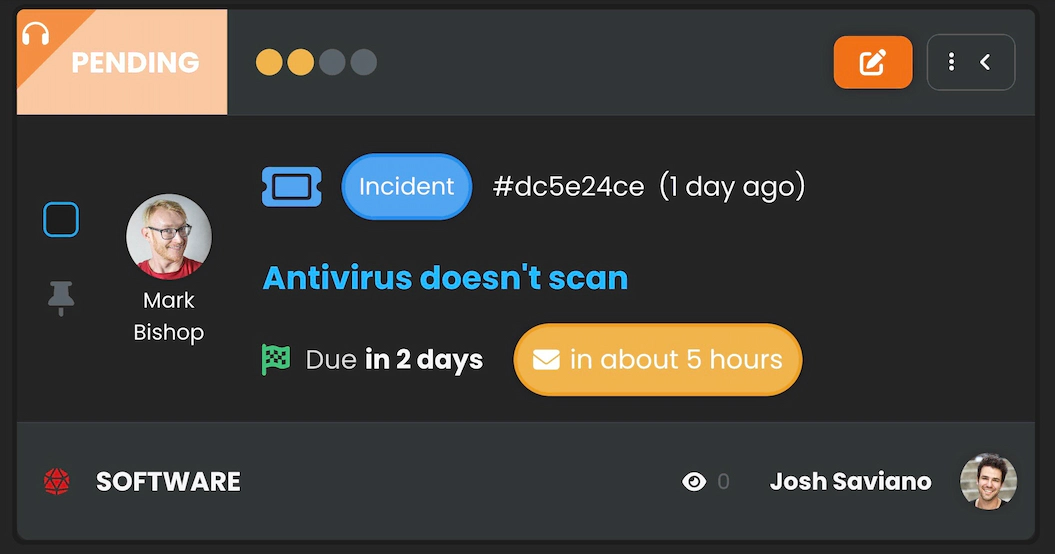
Another Agent Worked on It Most Recently
The headphones icon shows that another agent recently updated the ticket. Before taking the next action, review the latest information and decisions so you do not repeat work or act on outdated details.
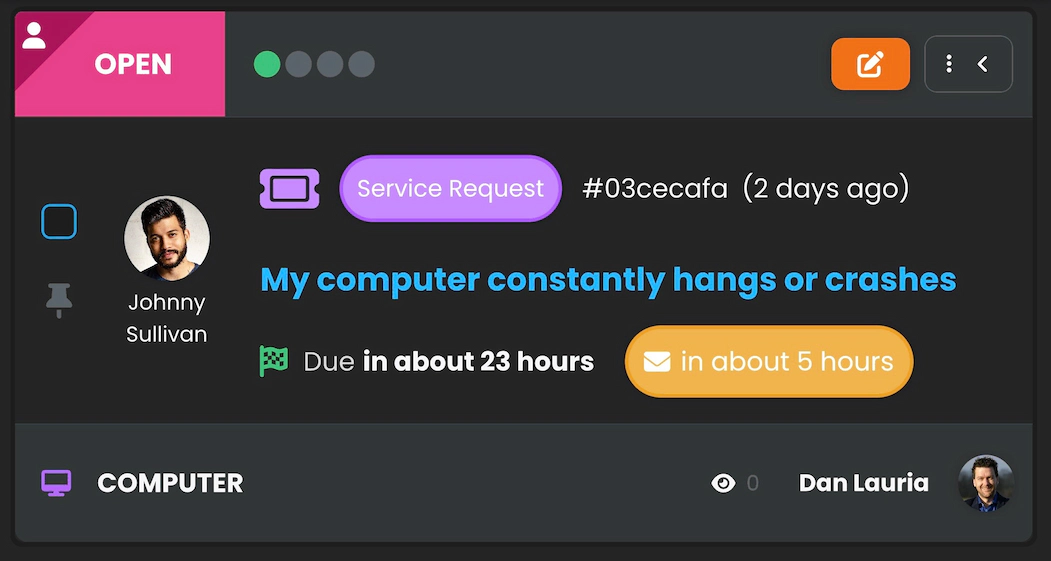
The User Updated the Ticket
The user icon means that the latest change came from the customer or employee who submitted the request. It may be a reply, an additional problem description, or a new attachment that requires the team's response.
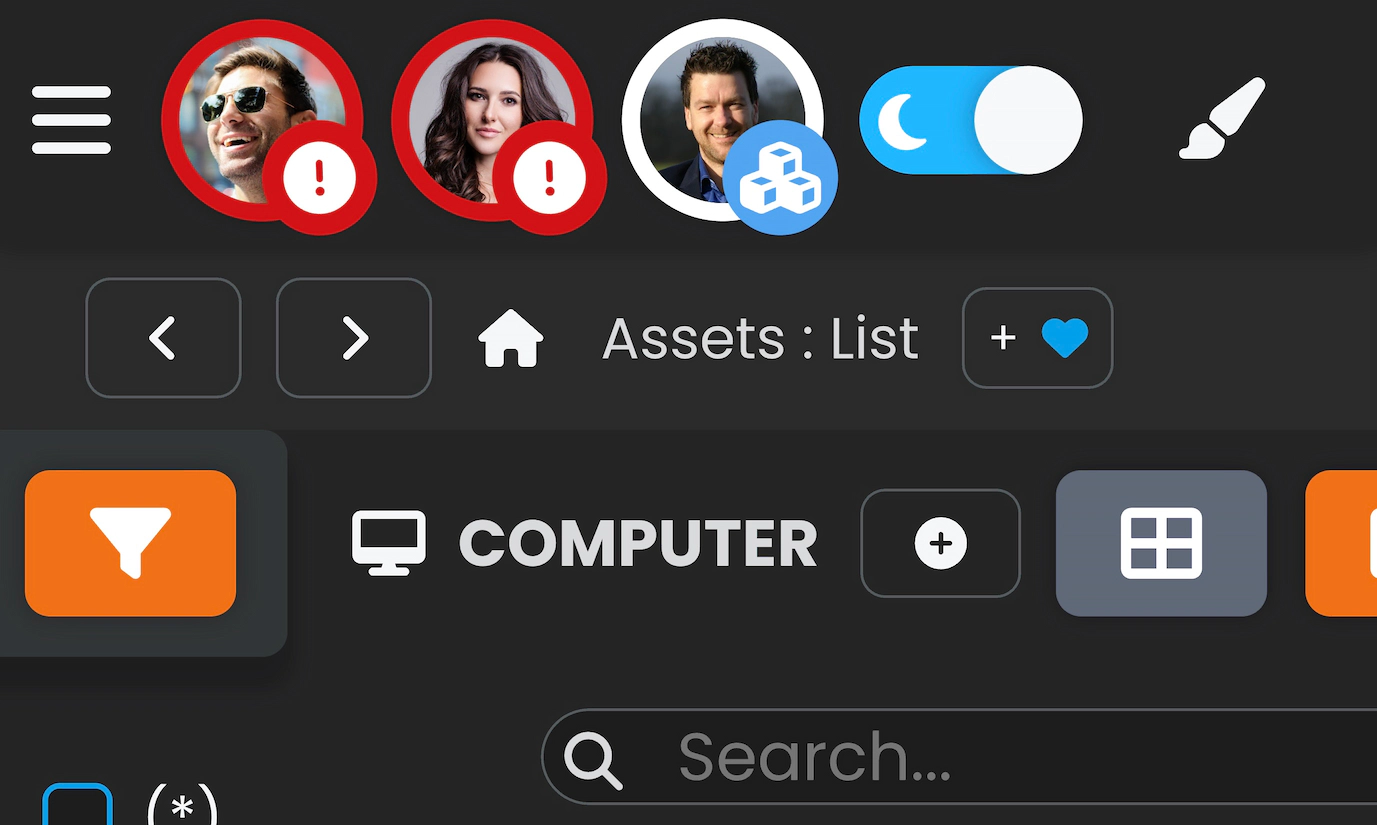
Instead of asking every agent whether they are still working with an item, the team can read this information directly in the application. The avatar border color helps show whether an item is being viewed or edited. When several tasks run in parallel, this signal limits confusion and makes it easier to coordinate the next step.
White Avatar Border
A white border means that the agent is not actively working on a specific item. They may be browsing lists or moving through the system without opening details. This signals that the ticket or asset is not currently being reviewed or edited.
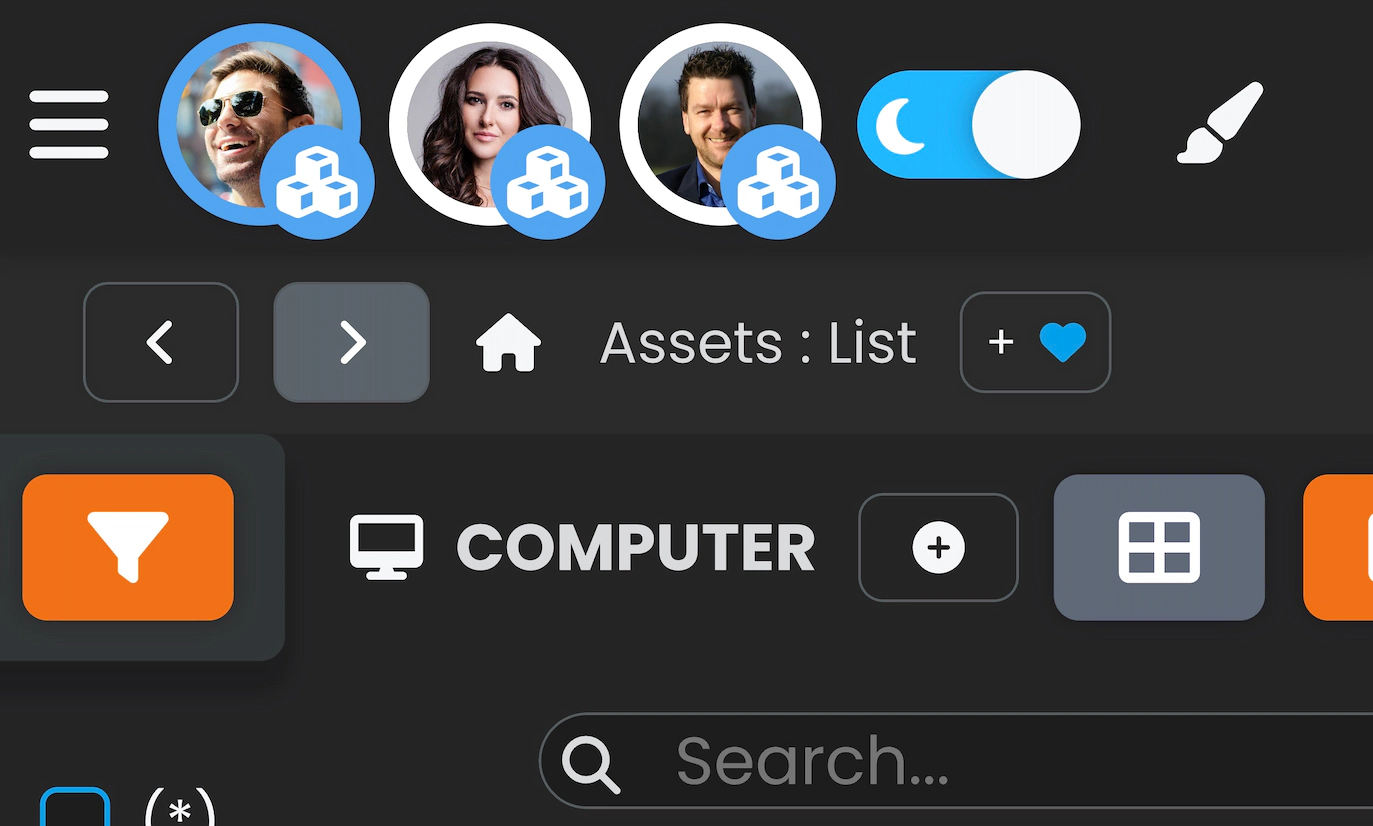
Blue Avatar Border
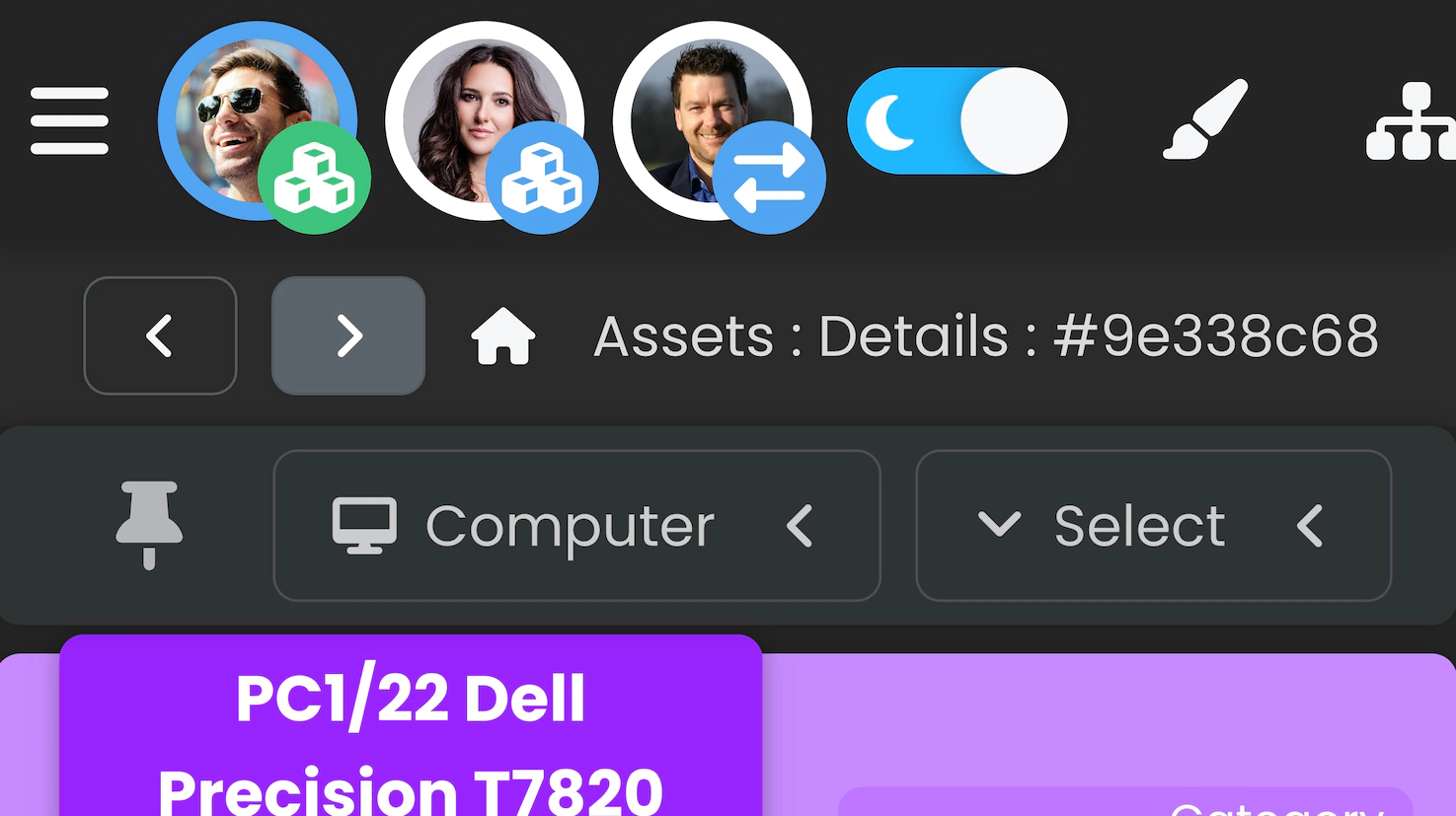
A blue border means that the agent is viewing an item's details, such as a ticket or asset, without changing the data. The team knows that someone is reviewing the matter, but there is no signal of active editing.
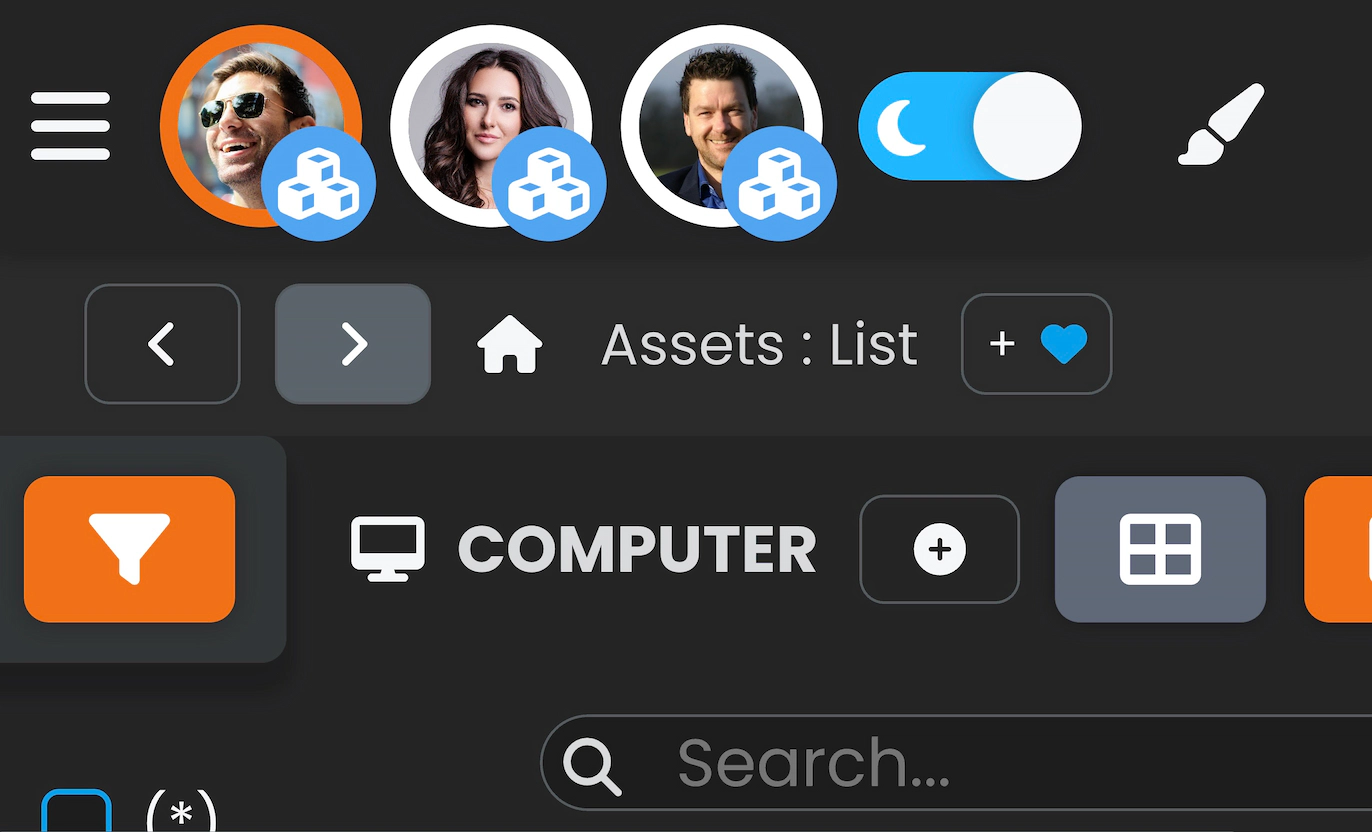
Orange Avatar Border
An orange border signals that an agent is actively editing an item. It tells the team that the data is being changed and that they should check whether their own changes concern the same area before saving them.
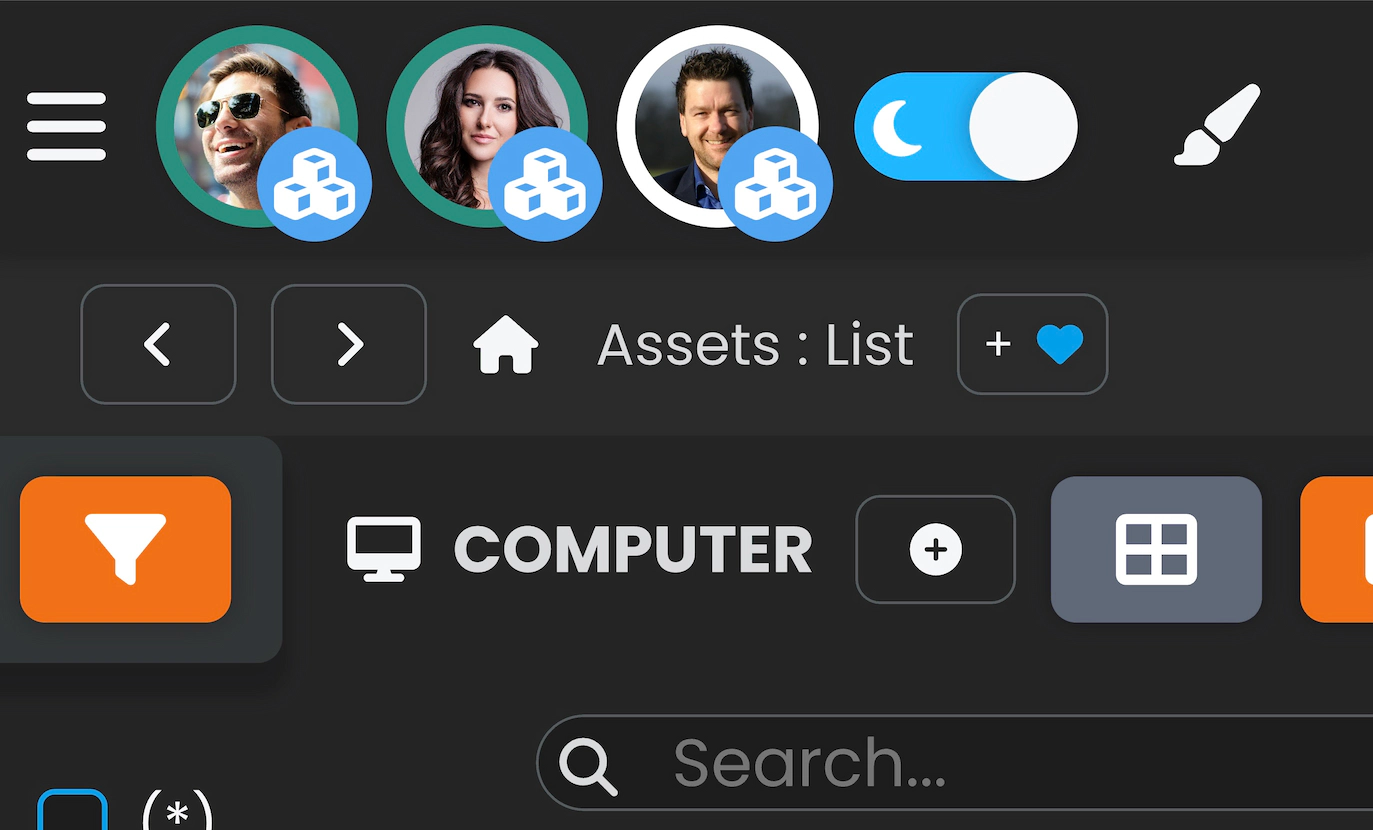
Green Avatar Border
A green border means that several agents are viewing the details together without editing the data. This often happens during a consultation, a handoff, or a joint analysis of a problem.
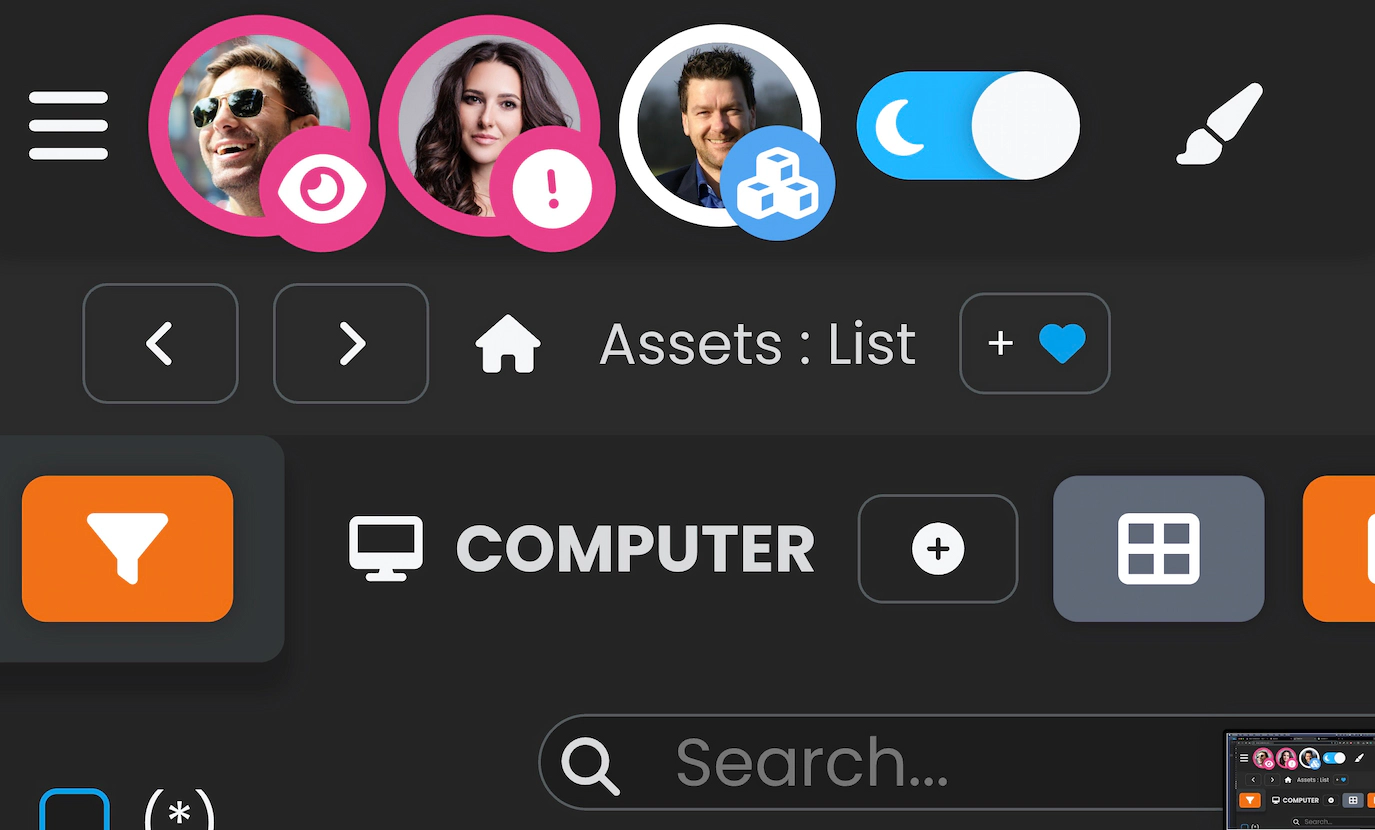
Pink Avatar Border
A pink border warns that an item viewed by other agents is also being edited. It tells the team to be careful, check the current activity, and avoid parallel changes that could conflict with each other.
Red Avatar Border
A red border means that several agents are editing the same item at the same time. The collision detection system gives the team a clear signal to decide who will save the change and who will wait until the work is finished.
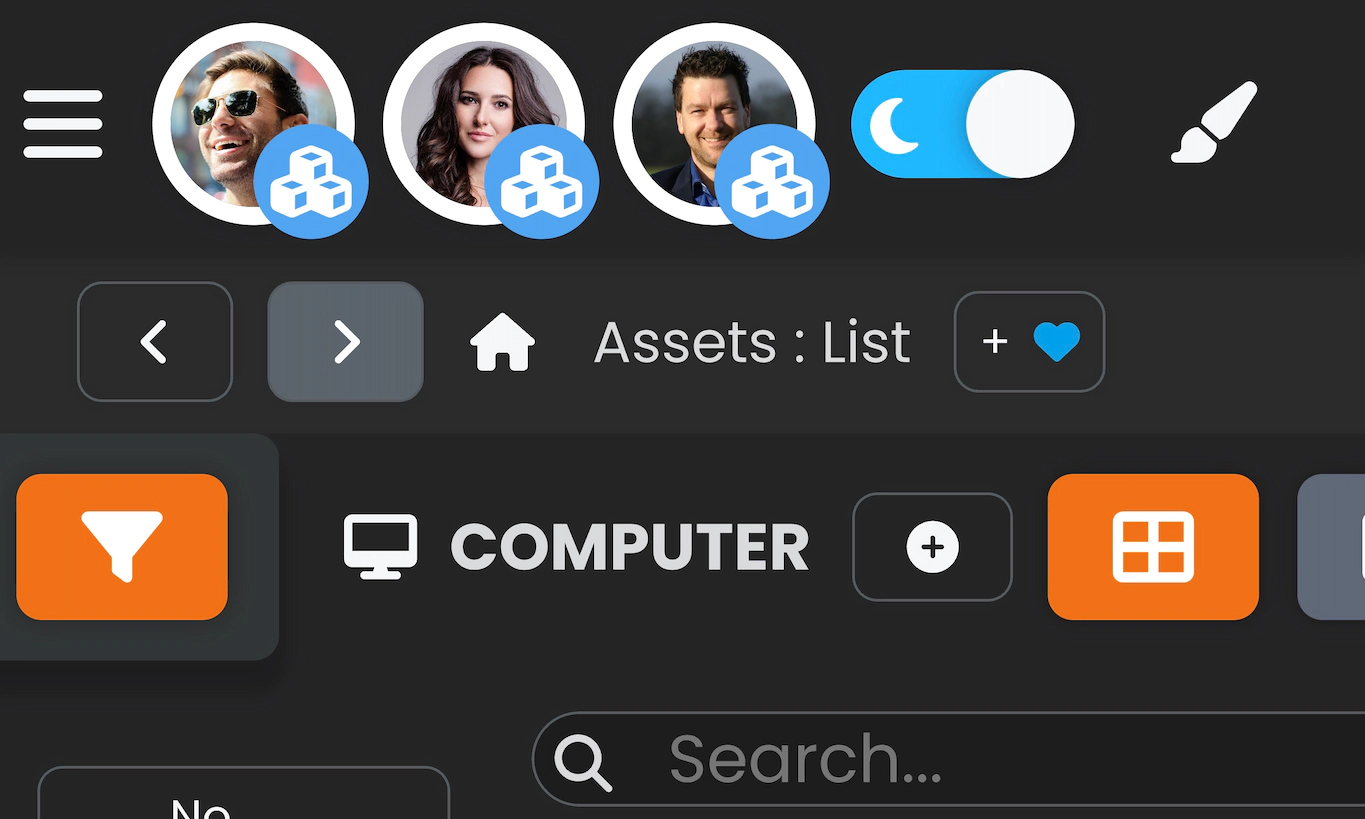
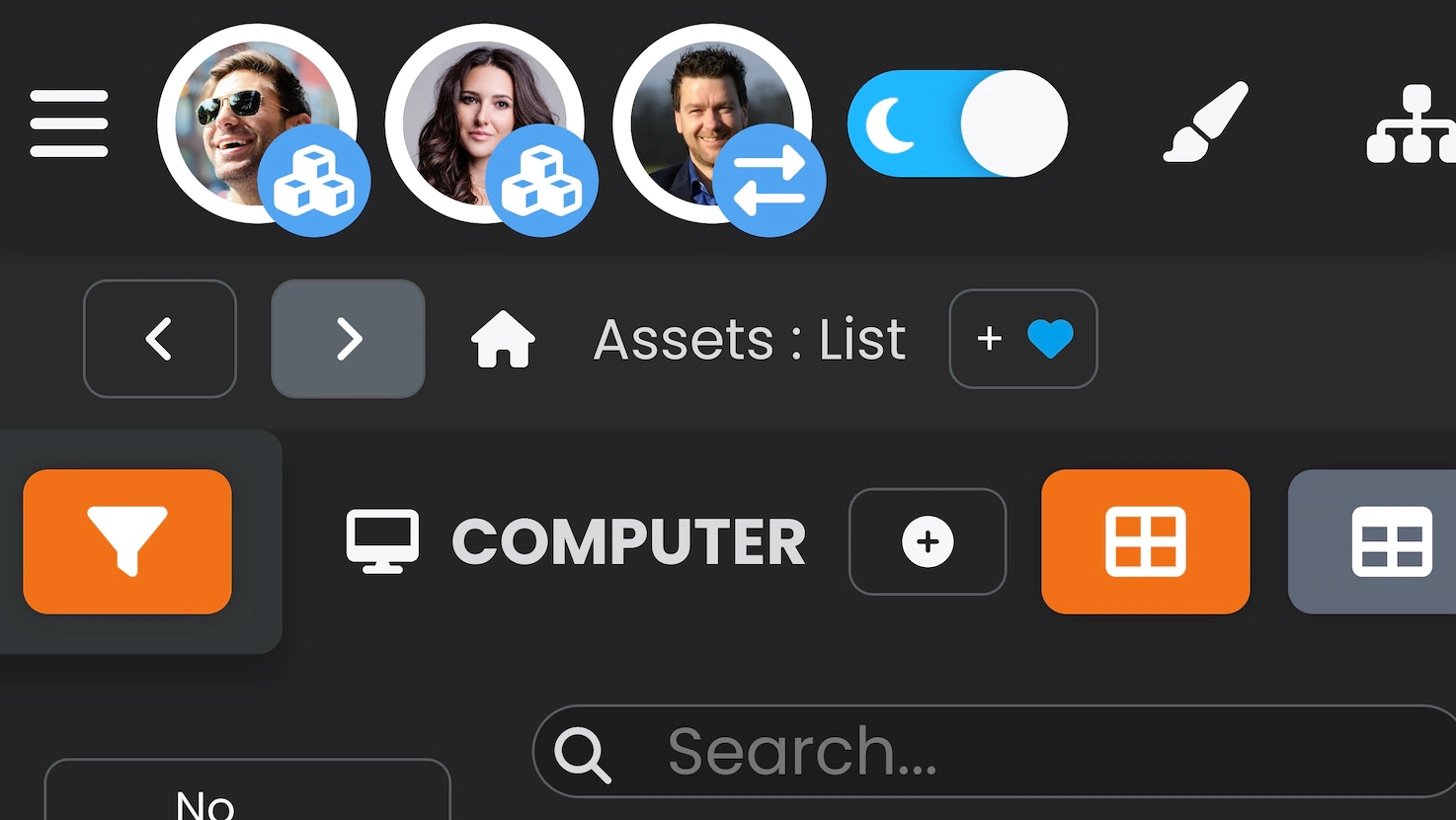
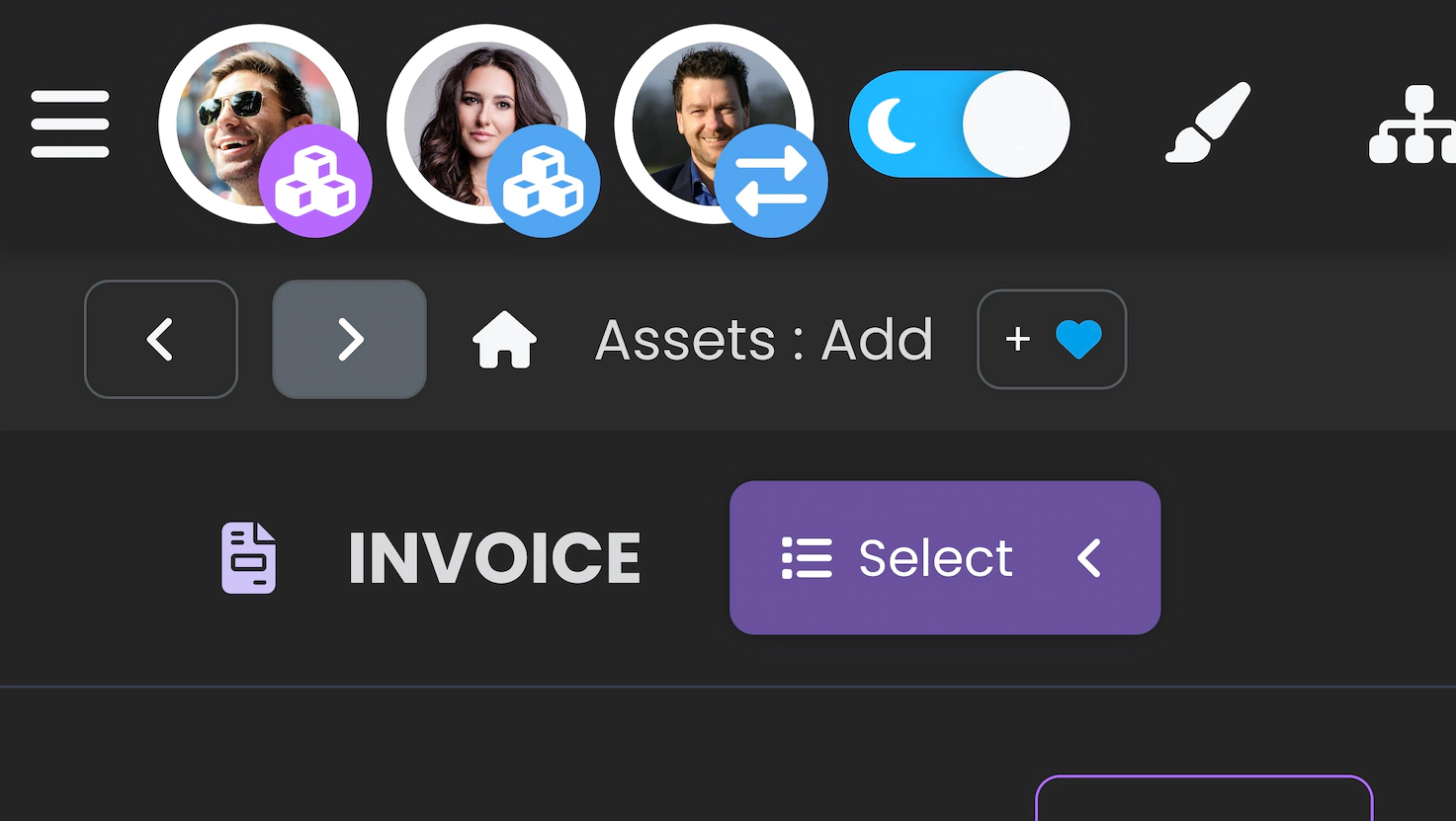
On the top bar with avatars of active users, the Codenica system shows an icon for the area where each person is working. The same icons appear next to the corresponding menu entries in the sidebar. You do not have to memorize what each icon means - just compare it with the icon shown in the menu.
The avatar border shows the state of work on an item, while the icon background color shows the agent's work mode. Together, they create a visual language that helps the team understand activity without checking every screen separately.
Blue Background - List View
A blue background means that the agent is viewing a list of items, such as tickets or assets, in a grid or table. This is an orientation mode for quickly reviewing many items without opening their details.
Green Background - Details View
A green background shows that the agent is working with the details of a particular item, such as a ticket or asset. Their attention is focused on one matter, so other team members can take this into account when planning their own work.
Purple Background - Adding New Data
A purple background means that the agent is adding a new item, such as a ticket, asset, or document. This tells the team that new data is being entered and that it is worth checking whether someone else is doing a similar task.
Want to See How Team Collaboration Works in the Codenica System?
Create a free business account and try working with teams, tickets, and shared context.